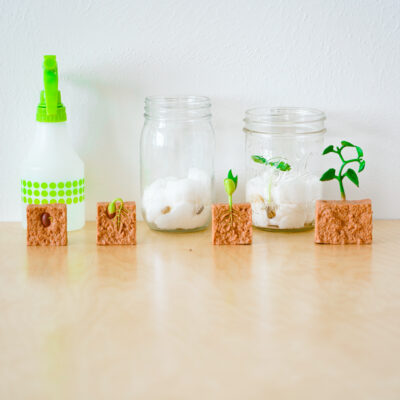
Sprouting Seeds in a Jar: Spring Science Activity for Kids.
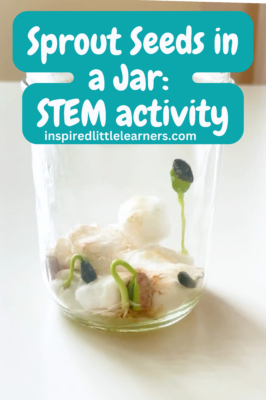
Get ready for Spring with this fun science activity for kids!
Using a few items that you probably already have, you can watch seeds sprout at home!
You can do the entire activity indoors, so it is the perfect activity to do in early Spring. (We live in the north, so our early Spring often still has snow and/or colder temperatures.)
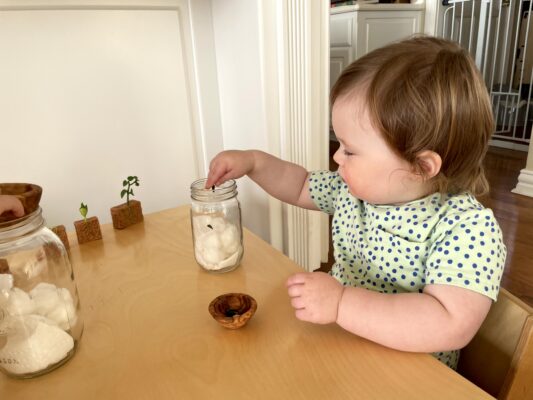
It is also a great activity to do in the classroom. (You can modify the activity to do in a plastic zip-top bag instead of the mason jar.) And is easy enough for toddlers to do (we first did it when my son had just turned 2 years old).
You can easily extend the activity to provide additional learning opportunities for older children. See my suggestions below.
This post may contain affiliate links. As an Amazon Associate and participant in other affiliate programs, I earn a small commission on qualifying purchases (at no additional cost to you). Thank you for your support! Read our disclosure policy here.
Sprouting Seeds in a Jar: Instructions
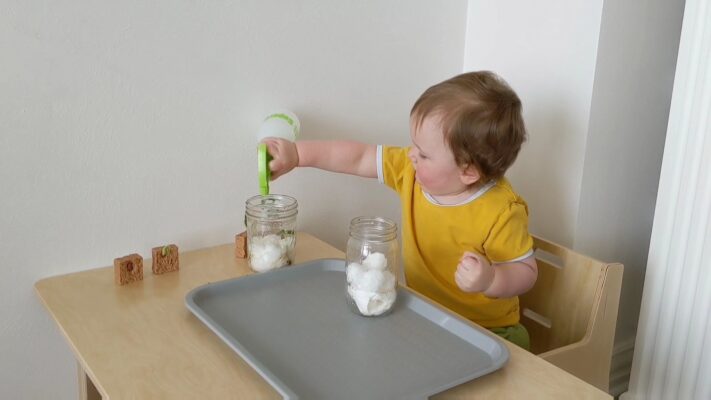
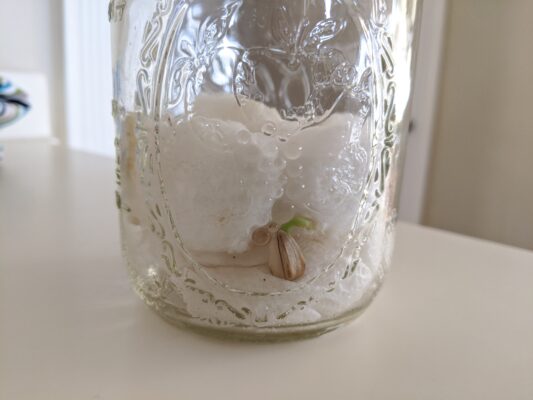
Materials:
Sunflower seeds or dried beans* (like pinto beans)
Clear mason jars
Cotton balls
Spray bottle
Steps:
1. Spread apart the cotton balls and place in a mason jar.
2. Place the seeds so they are wedged between the glass and cotton balls.
3. Lightly spray the seeds. (Continue spraying the seeds at least once a day.)
4. Observe!
*I recommend using multiple beans (or sunflower seeds), as sometimes an individual seed may not sprout.
Sprouting Seeds in a Jar: Extension Ideas
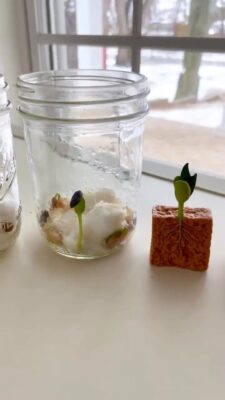
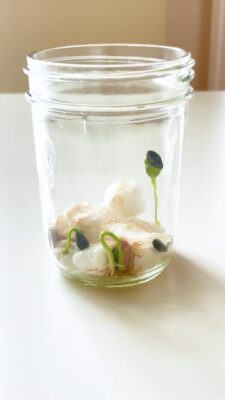
🌱Try different dried pantry beans and compare how long it takes the different seeds to germinate.
🌱Experiment with how much sun or water the seeds receive and compare their growth.
🌱Learn to identify the parts of a plant as the seeds sprout.
🌱Once the seeds germinate, plant in soil and continue to care for your plants!
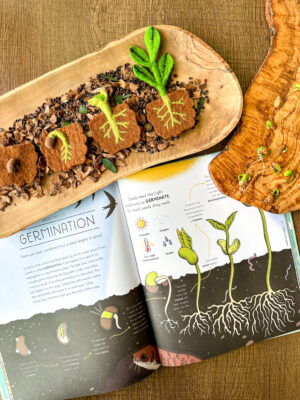
You can pair this activity with life cycle toys that encourage additional hands-on learning. I recommend the following sets:
– Life cycle of a bean by Safari LTD
– Felt life cycle of a bean by Tara Treasures
Books to pair with this activity:
– “From Seed to Plant” by Gail Gibbons
– “Nature Explained: A family guide to 20 nature cycles” by Helen Brown and Claire Scully